
Siblings' Sight | Newsletter 2
Forced to bond over film a decade ago, still connecting through anything art today.


Welcome everybody to our second newsletter! This month we have one meal on the menu: the rich!!!
Growing up, my sister and I were indoctrinated by our activist parents. Together we marched and chanted slogans such as “geen man, geen vrouw, geen cent voor het leger.” [no man, no woman, no cent for the army]. Our parents spent their early years holding hands for peace (I’m doing them an injustice here — they did a little more than just holding hands of course.) And although their activism may have been a little dormant while we were younger, (something we call “links lullen, rechts vullen” [bullshitting over left, but filling your pockets over right]), they are now once again at the frontline of Dutch activism with highway occupations and human rights marches. Considering we were spoon fed on leftist rage, we now have to at least overthrow the system to outdo them…
And of course, as I cannot not mention it, now that the far-right once again won in the Dutch elections, I sincerely hope that the two reflections you read here can fuel some much-needed energy towards the people that are to blame for this mess of a world: the rich, the powerful, and all those who stand in for the systems that exploit us. So, have a nice read and enjoy our reflections on these systems of oppression. And with another one of my sister’s poems!!!
So don’t forget guys! You do not hate Mondays, you hate capitalism. Happy Monday!
Brutally Beautiful, Stunningly Sad and Virtuously Violent by Britt de Graaf
The silence surrounding The Garden of Earthly Delights
I need to get something off my chest: the eerie feeling I have got ever since I watched The Garden of Earthly Delights. A feeling stemming not only from the dreadful topics the film talks about, but from the silence that came after. The film premiered at the end of May this year. At last month’s Netherlands Film Festival, it won four awards. The film has, however, been withheld from most film festivals, attracted only a few thousand cinema-goers and is, despite its awards, now only being shown in two Dutch cinemas. The Garden of Earthly Delights confronts us with a very harsh and unpleasant reality, and it seems like we do everything possible to avoid talking about these matters.
The Garden of Earthly Delights is staged against the backdrops of Manila, the capital of the Philippines. The film is directed by Dutch director Morgan Knibbe. The crew is both Dutch and Filipino. In the film, we follow the Dutch tourist Michael to the slums of Manila in search of his Philippine girlfriend whom he met online. However, she is nowhere to be found. Michael takes a hotel in the nearby red-light district and is left miserable and alone. We see how he looks longingly at his chat history with his so-called girlfriend, or rather at the pictures and videos of her young son. In the slums of Manila, we also follow the coming-of-gangster-age of the young Ginto. Ginto and his friends are struggling to survive. They do not have the opportunity to go to school, nor do any other kind of kid-things. Their days are filled with drug abuse, theft, dealing and a lot of unsupervised strolling around the streets. Ginto lives and argues with his sister Asia, who works as a sex worker to pay for their livelihoods and tries to save up money for a better life in Denmark. Ginto is dragged further and further into this Garden of Earthly Delights that is the red-light district of Manila. His path eventually crosses that of Michael, who is no longer able to resist his forbidden and repulsive urges. This Garden of Earthly Delights has something to offer for everyone, no matter how terrible and wrong. The camera films mostly at ground level, with grim shots of the hard life on the streets. Only when the film focuses on Ginto and his struggle with his sexuality and gender, do these grim shots start to become filled with colour. In those moments, colourfully drawn flowers pop up everywhere. Every now and then, the camera zooms out and shows us the colonial and capitalist influences that tower above the harsh street life; a cathedral, a cruise-ship and a lot of neon signs ascend the daily struggles of life in the slums of Manila.
The film surely is not an easy watch. It tries to unpack a lot of heavy matters, too many maybe. But we are meant to be uncomfortable while watching. The film demands uncomfortableness. Knibbe confronts us with the harsh reality of a formerly colonialised society that suffers from capitalism and hyper consumerism. It shows the roughness of the lives of the people behind our fun trips to Asian countries such as the Philippines and the ‘fun’ nights we expect to have here. With this film, he is calling out our white privilege. Because, yes The Garden of Earthly Delights is a film, but the story it tells is very real.
Only a few days after I saw the film, the following news headline popped up on my phone screen: “Every year, twenty thousand Dutch men commit sexual abuse of children abroad, according to a report by the WODC”. I was and am shocked by those numbers. Even more so after seeing a film that unpacks the story behind those numbers. Because this is not just about numbers, how shockingly high they may be, it is about lives. Real lives, of real people. People that are not part of our everyday life, but people whose everyday life we, as people from a Western and formerly colonial society, still influence on a daily basis. During the film I did not directly connect the storylines of Michael and Ginto, but during the film I began to suspect the plotline more and more. It definitely was a hard watch. At some point someone in front of me even left the film theatre. But it is nothing but the ugly truth. Numbers don’t lie and nor did the film. And even if, or even more so when the truth is ugly, we need to talk about it. And we surely could use some help. Because those matters are not easily brought up at the dinner party.
Art, and film in particular, have proven to be very useful for starting conversations about ugly truths. In the Netherlands, film is actively deployed as a means to talk about such matters. During last month’s Netherlands Film Festival (where The Garden of Earthly Delights won its awards), the film Pupil premiered. Pupil tells the story of a young victim of a grooming football coach at a local football club, based on the autobiographical book of Steven van der Hoeven. According to the Dutch Media, the film “must assist in initiating discussions about inappropriate sexual behaviour at sports clubs”. So why do we not encourage The Garden of Earthly Delights as such? Why is there so much silence around this particular film? A film that not only found a way to tackle matters that are very urgent in the Netherlands right now, as the disturbing news headline shows, but has also been rewarded with multiple awards for its quality. Should we not applaud and stimulate this as much as we can?
Sadly enough, we do not. Morgan Knibbe shared in an interview the backlash he received over him being the director of this film. One of the programmers of a prominent film festival, got mad when Knibbe turned out to be ‘a white man’. Focussing on only this, however, completely misses the point of the film. The film focuses on white privilege, on the effects that white supremacy, capitalism and colonialism has on a formerly colonized society, years even after the formal decolonialisation of this society. And expecting the people that are already suffering from these structures and who do not have the same opportunities as white males because of these structures, to be the only ones who may tell these stories, is not a good thing. It is not only unfair to ask, but also a fairly simple way to nót have to be confronted with these stories and to not have to talk about them. Because even if someone has the guts and ability to talk about these matters, to tell these stories, even if that person is a white man, yet another way is found to silence them. To not have to listen to these stories. To not have to talk about it.
I think The Garden of Earthly Delights is brutally beautiful and stunningly sad. But the silence that came after, has made me feel the most uncomfortable. It is the silence around it that makes this film virtuously violent. Because for all the screens that choose to silence The Garden of Earthly Delights, there are cinemas full of Michaels finding their way to Ginto and other children in the Philippines and similar countries. So please, find a way to watch The Garden of Earthly Delights and have the necessary talks about the stories it tells, but be prepared for the worst…
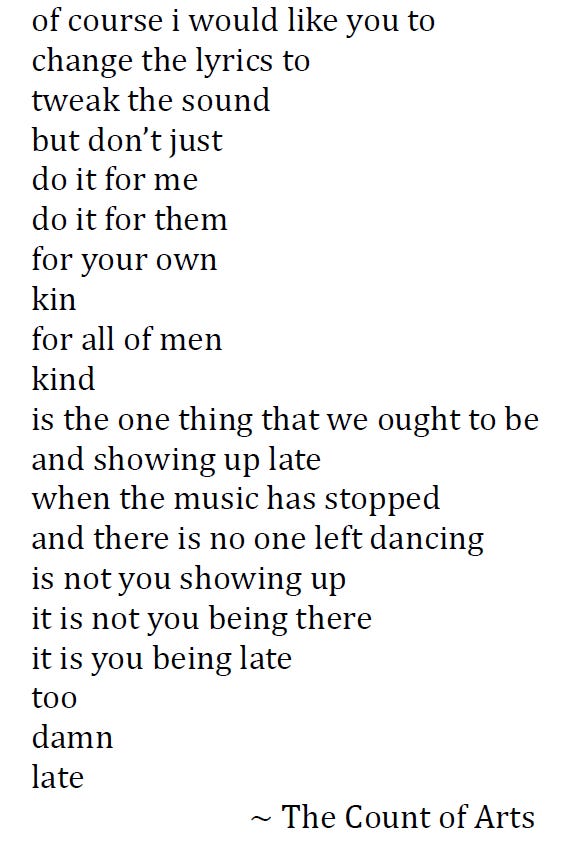
Déchet de Vie by Fay de Graaf
How Buñuel shows the emptiness of the bourgeois life
I’m particularly fond of the poor, I mean the working class. I think of them particularly when it snows, nothing to keep them warm, no hope, nothing. Husson says while enjoying a cigarette in a ski resort. Belle de Jour shows us that director Luis Buñuel shares a similar fondness of the bourgeoisie as Husson does for the working class. From the moment we meet our main character, Séverine, it becomes clear that all the excessive beauty in her life is an abundance of nothingness. Not even when she breaks a vase does she have to go down on her knees to pick up the pieces of the mess she made; there are people she can pay to do that. Are you free? She is asked at one moment. From behind the bars of luxury and beauty she answers: No. In Luis Buñuel’s signature surrealistic style which flawlessly weaves dream, reality and fantasy into one, an answer is demanded of the question: whose desire are we living?
It is the unhappiness Séverine feels with her life that renders her completely human. For who is ever truly satisfied? Do we not all desire what we do not have? It is this restlessness that drives Séverine, that we recognize in the (day)dreams about her own violation, dreams that illustrate her lack of control. The life of excess is not something she can live with, and thus she searches for the margins of her life, stretching them until they break. This, too, is severely human: overstepping our boundaries, just so we can handle them again during our “everyday life”. It is the necessity of drinking ourselves into oblivion on New Year’s Eve, to be prepared for a whole new year of 9 am mornings. This transgression of the everyday rules allows us to affirm what our everyday life looks like. By affirming it, we validate its existence. So, by overstepping the margins, we “emphasize” the existence of the margins, of the life that allows there to be something to overstep. It is a way of giving meaning to all the absurdity and tragedy that life entails. As Nietzsche would call it, it is a yes-saying to life. Séverine escapes the limitations that are set to her bourgeois life by choosing to work in a brothel where she is christened belle de jour, beauty of the day.
In glimpses throughout the film, we are reminded that the bars of Séverine’s life are not only made of gold. As a woman, her place in the mansion is not much different from that of a beautiful couch (provided that a couch could refuse being sat on). There is very little expected of her beyond her beauty, beyond being an accessory to be taken to her husband’s dinner (and only when he decides the accessory is fitting). As told by Husson: “sex” is the only option women have for revenge, meaning sex is the only place a woman could have power. Flashbacks allude to her being molested, which gives a deeper layer of understanding to the voluntary exploitation of her body.
Buñuel does not show her the same lack of empathy as he does his other characters. An example of this is how he changed the “moral lesson” of the ending of the book, where originally Séverine gets punished by the writer for her acts, completely switching around the theme of the story. But even in a brothel, she is unable to escape her bourgeois class. When another servant is there to clean up her blood from the sheets, telling her it really must be hard sometimes, Séverine cannot let her in. What do you know about it, Pallas?
It would not surprise anyone that this run to prostitution does not work. The question is posed here: whose desire is Séverine living? For the life she seeks to affirm was already so excessive that it became wasteful. And wastefulness is always meaningless. It is the result of the capitalistic desire that our society is driven by. It is the idea that there is an objective end that we should all aim for, that there is a single happiness that will work for everyone, a desire for always better: a bigger car, a newer phone, another promotion. This excessive excess becomes a mere commodity: the meaning we seek in our life becomes something to buy. This wastefulness is not something that we can affirm, as it is not ourdesire but the desire of a capitalist structure. Any step taken towards this objective end moves us further from becoming ourselves.
Even in their sexual desires, the bourgeoisie only wants to put on more theatre, more ridiculous dreams, more excess with nothing underneath. It parallels the whole film, which sometimes feels more like watching ventriloquist dolls than human lives.
The way Séverine transgresses the limitations of her life will never actually make it a more meaningful life to live. She hates her life, and instead of changing anything to make it more her own, she attempts to affirm the limitations by choosing to “live” the life of the plebeians, just so she can once again feel why her life of excess is actually good. But by choosing prostitution she will not understand the material situation of the lower class; and the sexual exploitation of her body will not make the gendered exploitation of her daily life any more meaningful, either. Though it seems to be a way for her to regain control, by using the only power the men in her life allow her she is reinforcing her exploitation.
The absurdity of the capitalistic structure finds its pinnacle in the bourgeoisie: they are the ones who have found the promised land, objective happiness is already theirs. And the possibility of attaining their life is the promise that capitalism keeps making to the rest of us. Luis Buñuel shows us the depth of this objective happiness. He shows us that if what we choose to affirm in our life is only the excess, our lives merely become wasteful. Then all the meaning that remains in our life will indeed only be that newest car.
If this newsletter has made you so furious you want to eat the rich, we might have something tastier for you! The ‘Anti-Facistische Actie’ (AFA). An organisation that fights fascism and extreme right-wing ideology. To end harmful and violent ideologies and strive for a safer and better future for all of us! Have a look at their website afanederland.org to get a glimpse of all the good things they do, or donate directly to their cause: donate here!